The Leather Tanners
Fes and the pits that haven't changed
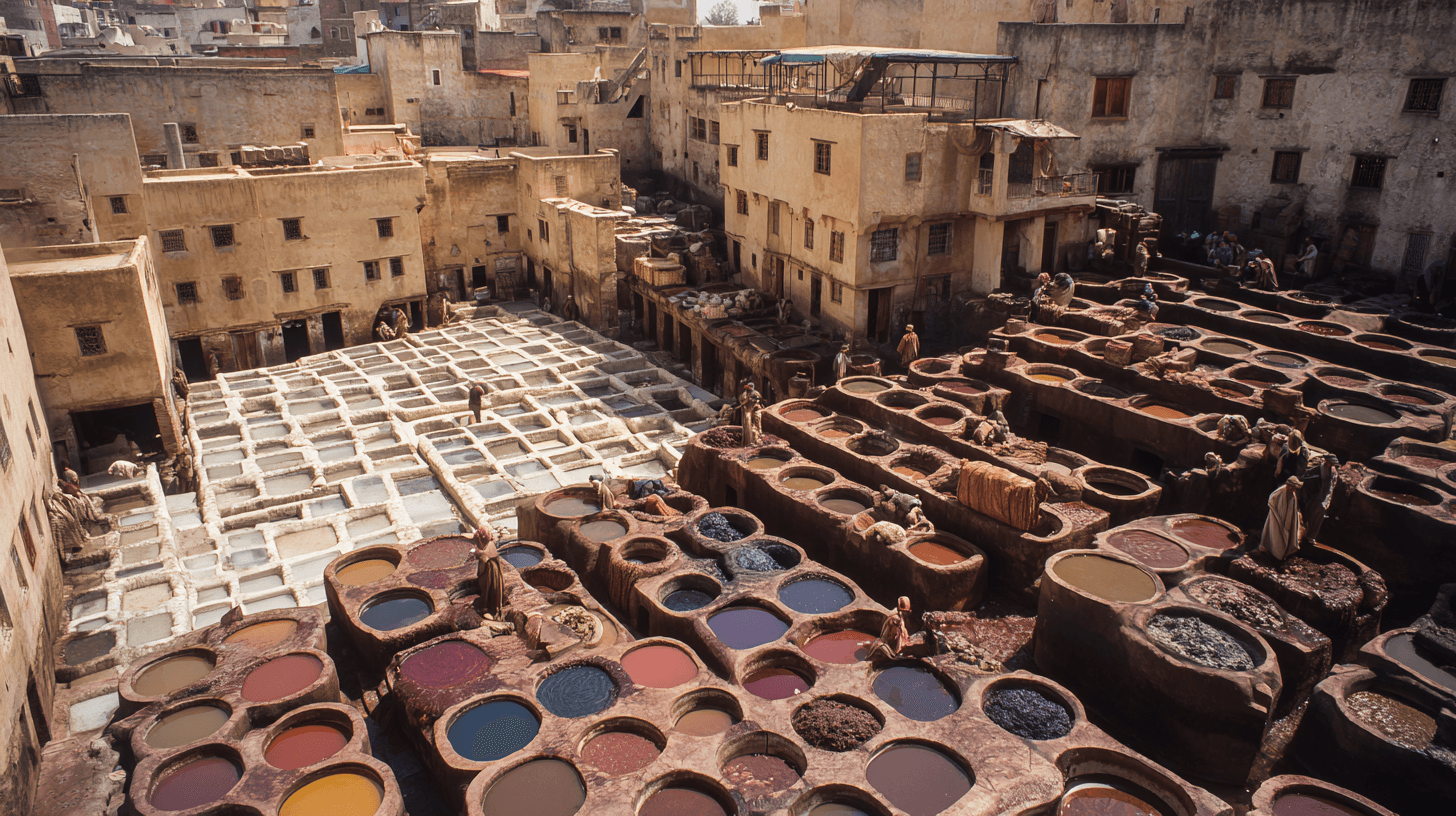
The smell hits you first — animal, vegetal, chemical, ancient. Then you see the pits: a hundred stone circles filled with liquids in every shade of brown and yellow. Men stand waist-deep in them, turning hides with their bare hands.
The Chouara tannery in Fes has operated continuously since the 11th century. The pits are original — some of the oldest industrial infrastructure still in use anywhere on Earth. The methods are original too. Pigeon dung for softening. Pomegranate bark for red. Mint and saffron for yellow. Indigo for blue. Animal hides transformed through chemistry discovered before chemistry existed as a science.
The process takes three weeks. Fresh hides arrive from the slaughterhouse stiff and stinking of death. First they soak in quicklime, which loosens hair and fat. Workers scrape them clean — backbreaking work done bent over, arms burning from the caustic solution. Then the hides go into pits of pigeon dung mixed with water, where bacterial enzymes break down remaining proteins. This is the softening, the bating, and it is as foul as it sounds.
Clean and softened, the hides move to the dyeing pits. Here the colors come — each requiring its own recipe, its own timing, its own technique. Workers wade into the vats, trampling the hides to ensure even absorption, knowing exactly how long each color needs. Too short and the dye won't penetrate. Too long and the leather weakens.
Finally, the hides are laid on rooftops to dry in the fierce Moroccan sun. From above, the medina's skyline is dotted with rectangles of color — yellow, orange, red — leather becoming what it will be.
The tourists stand on terraces overlooking the tannery, pressing mint to their noses against the smell, photographing the geometric beauty of the dye pits. They do not see the men's hands, cracked and stained from chemicals that burn. They do not see the decades of knowledge required to turn a raw hide into supple, colored leather that will last a century.
The workers know the tourists find them picturesque. They keep working. Their grandfathers worked these same pits, in the same solutions, turning the same hides. The smell has been constant in Fes for nine hundred years. It is the smell of tradition refusing to die, even when everything about modernity suggests it should.
The Facts
- •Chouara Tannery dates to 11th century
- •Original stone pits still in use
- •Process uses pigeon dung for bating
- •Natural dyes: pomegranate (red), saffron/mint (yellow), indigo (blue)
- •Full treatment takes 3+ weeks
- •UNESCO World Heritage site
- •Workers spend up to 8 hours daily in pits
- •Fes produces majority of Morocco's traditional leather
Sources
- Le Tourneau, Roger. 'Fès avant le Protectorat.' Larose
- Tazi, Abdelhadi. 'Jami' al-Qarawiyyin.' Ministry of Culture
- Parker, Richard. 'A Practical Guide to Islamic Monuments in Morocco.' Baraka Press